Recently I have been working on a large oil painting of Vajradhara Buddha, the primordial buddha who represents the essence of the historical Buddha's realization of enlightenment.

Vajradhara Buddha
Oil and acrylic on Kalamkari fabric42" x 48"
While visiting China last June, I quickly became enamored with a beautiful Vajradhara statue in the Beijing Capital Museum's ancient buddhist sculpture collection. You can see much of the collection on my post from October 2019. The expressive gentle tilt of the head and delicate positioning of the hands gives a feeling of inward contemplation, wisdom, and enlightenment. I'd need to paint a "portrait" of the Vajradhara so I could spend a considerable amount of time studying this masterpiece.
Over the past few years, I've been creating acrylic paintings of stone statuary primarily using neutral grays and browns in a grisaille technique. I was, however, so excited by the vibrant Tibetan turquoise inlayed stones and golden color this statue that I knew this would be the perfect opportunity to return to oils which would allow a richness and luminosity.
Over the past few years, I've been creating acrylic paintings of stone statuary primarily using neutral grays and browns in a grisaille technique. I was, however, so excited by the vibrant Tibetan turquoise inlayed stones and golden color this statue that I knew this would be the perfect opportunity to return to oils which would allow a richness and luminosity.

Vajradhara
1368-1644
I stretched a hand-blocked cotton Kalamkari fabric from India to use as the canvas. Gold metallic paint was used to stencil ornate designs onto the fabric. I then stained the fabric with washes or acrylic paint to give more contrast, bringing these designs forward.

The fabric needed to be primed prior to using oil paint to protect the fibers from the oil which could rot the fabric over time. Traditionally a white gesso is used as a barrier between the canvas and paint. Because incorporation of the hand-blocked pattern was desired, I experimented with a clear latex paint. Art supply stores have started selling clear gesso, but I have been told it can look cloudy. Rust-oleum Ultra Cover Clear is clear, glossy, and also provides UV protection to help keep the fabric from fading.

I was pleased by the way the clear paint changed the look of the yellow fabric, making it look wet. The picture below shows the untreated fabric on the right. You can see the clear paint darkened the yellow fabric causing it to become a deeper golden color which gave it an antique quality that highlighted the subtle parts of the pattern.

I had forgotten how easily the buttery oils glide over the treated surface. Applying the paint was so easy and fun in comparison to the way this raw fabric resists the application of acrylic paint.


A visit to the Small Wild Goose Pagoda in Xi'an ( built between 707-709 during the Tang Dynasty) provided the inspiration for the spinning circular motifs and floral elements that were added next.

Small Wild Goose Pagoda, Xi'an 707-709
Though people are no longer permitted inside the pagoda, a museum is housed in the smaller building pictured in the foreground of the photo below.

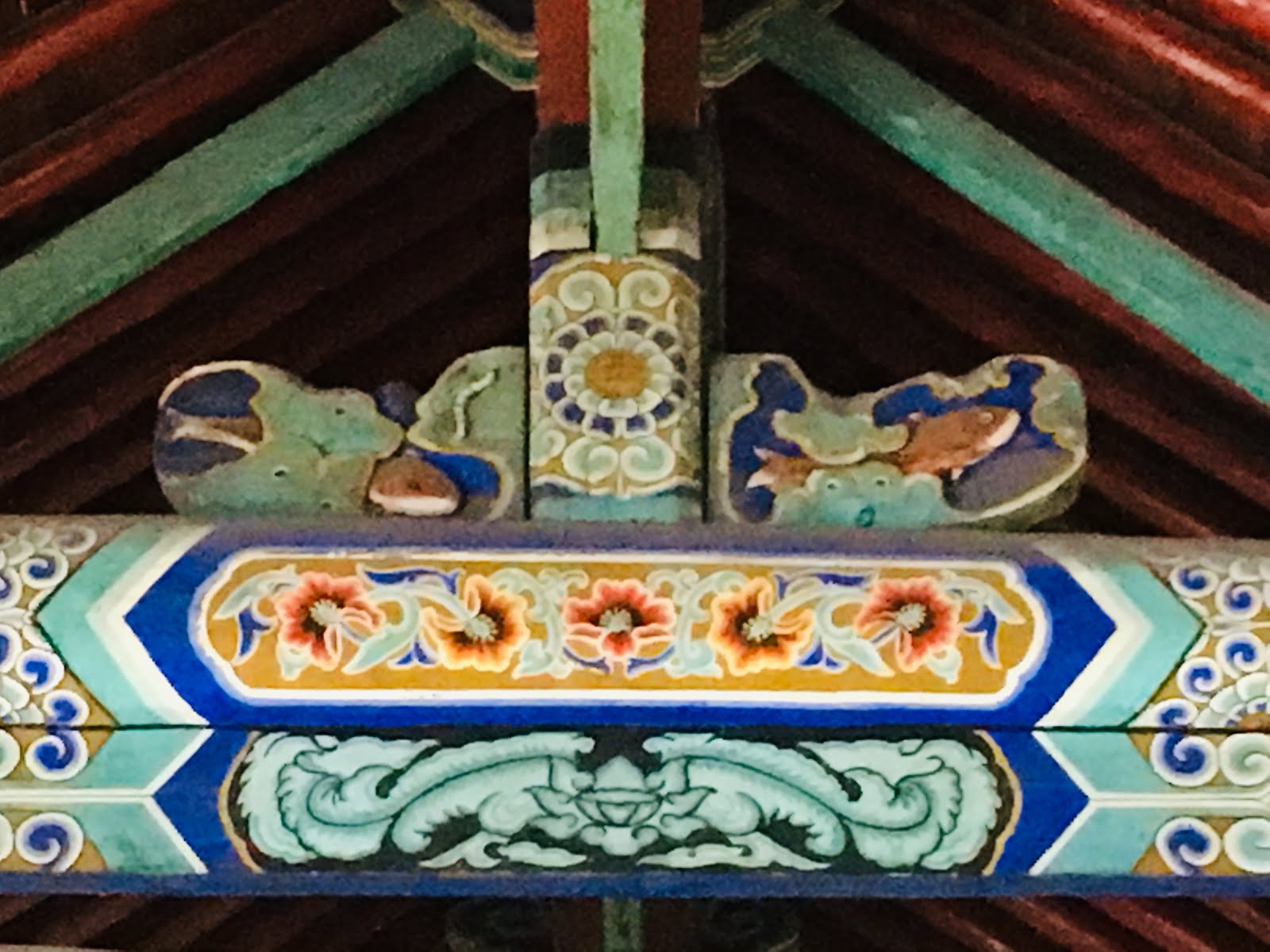
The ceiling of the museum building featured large wooden beams painted with intricate designs.


The color and zigzag patterned border of the fabric I chose was reminiscent of the background of the ceiling designs.
I added a thin, transparent glaze to age the brilliant blue, white and turquoise spiraling wheels with the look of years of grime.

The use of the same cobalt and robin's egg blue on the leaves seemed a surprising choice for the leaves in the floral designs.
Medallions present in the pattern of the hand-blocked Kalamkari fabric were allowed to replace some of the jewelry on the statue and float freely, playing in space.

Sometimes it is hard to decide when an artwork is finished. Though I intended to add more to this painting, it is telling me to stop.
Time to start the next new work!
Don't forget to check out my artwork available at my Etsy store, Facebook page, as well as my Instagram feed.
Don't forget to check out my artwork available at my Etsy store, Facebook page, as well as my Instagram feed.


